Content planning should never start from a blank page or generic AI prompts. By feeding real channel performance metrics, search trends, and competitor patterns into a structured Content Intelligence workflow, teams can generate layered hooks (speech, visual, and on-screen text) and data-backed content briefs that consistently outperform guesswork.
Key Takeaways
- The first 3 seconds determine short-form video retention—always script written, verbal, and visual hook layers together.
- Use historical post engagement and search trend momentum to decide what topics to film next.
- Build a reusable Hook Library tagged by psychological trigger (curiosity, problem-led, authority, contrarian).
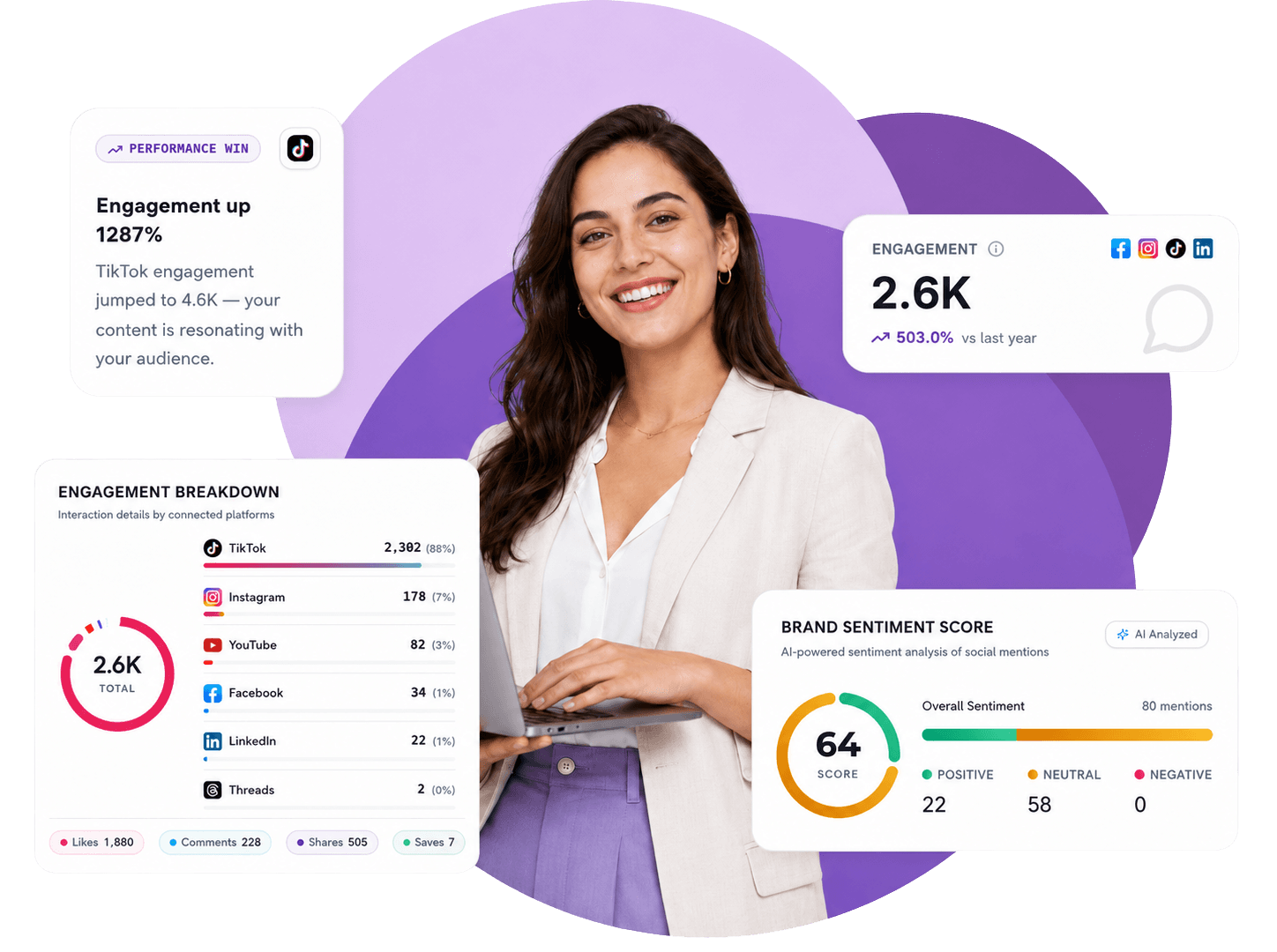
Most social and content teams lose hours staring at a blank calendar or prompting generic AI tools that know nothing about their client’s past performance. The result is predictable: generic topics, slow video intros, and inconsistent reach.
Content Intelligence flips that workflow on its head by starting every content plan with real performance signals.
Why generic AI prompts fail for agency content planning
When you ask a generic chatbot for “10 Instagram Reel ideas for a B2B client”, it has zero visibility into which hooks held attention last month, what questions are rising on Reddit and Google Trends today, or which formats your client’s audience actually saves and shares.
| Approach | Starting point | Hook structure | Client approval rate |
|---|---|---|---|
| Blank-page brainstorming | Gut feel & ad-hoc scrolling | Single headline written at the last minute | Slow, subjective revisions |
| Generic AI prompts | Context-free text prompt | Repetitive, cliché openings | Low differentiation |
| MyContentLab Content Intelligence | Connected analytics, trends & listening signals | 3-layer hooks (speech + visual + text) with strategy notes | Fast sign-off backed by data |
How to build 3-layer hooks for the first seconds of attention
High-performing Reels, TikToks, Shorts, and paid video ads rarely rely on words alone. Inside MyContentLab Hooks, every opening is structured across three simultaneous layers:
- Verbal / Speech Hook: The exact spoken line in the first 2–3 seconds that creates an open loop or addresses a sharp pain point.
- Visual Action Hook: What the viewer sees in frame one (movement, pattern interrupt, prop, or camera transition).
- On-Screen Text Overlay: A concise, scannable caption designed for viewers scrolling on mute.
Pro Tip: Generate 5 to 10 hook variants for your strongest content idea before filming, then record the top 3 openings in the same session. Testing hooks is the highest-leverage way to double video reach without filming a new body script.
Frequently Asked Questions
What is Content Intelligence in digital marketing?
Content Intelligence is the practice of using real performance data, search trends, and audience conversation signals to guide what content to create next—rather than relying on guesswork or generic AI prompts.
Why should video hooks be planned in three layers?
Viewers consume social video differently: some watch with sound on, some scroll on mute, and others react to visual motion first. Planning speech, visual action, and on-screen text together ensures your opening works in every context.